Game Grind: Localization, Gamings Eccentric, Hot Mess

Happy Saturday BaddaBing BaddaBlog readers! This is Game Grind, the place where any and everything video game related is discussed with vigor! Today’s topic is going to be a doozie; and by that I mean that this topic is fairly controversial. Today’s post is going to be all about localization, or the changes a game goes through when it adapted for a new audience in a different region than the one it was produced for originally.
Localization

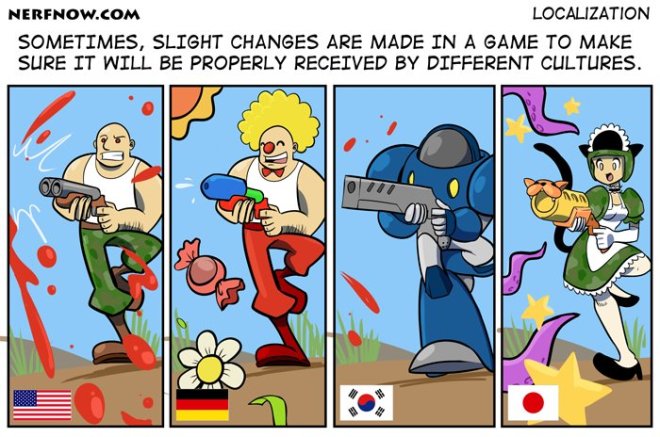
I should begin this article by prefacing that localization is one of the biggest reasons why video games have become a world wide phenomenon and is a massive contributor to its growth as an art form. Localization, in its most basic form, is changing aspects of a game when it is brought to a new culture, so that the new culture can more easily enjoy it. When localization occurs, the most apparent change in a game is it’s language. By changing the language in a game to the most common language of the culture it is being introduced to, it allows for thousands if not millions of people to easily experience and understand the narrative that is being presented to them. Localization allows stories and perspectives from all over the world to be shared and experienced with people who never could otherwise. Localization can bring people from all over the world together and that is pretty freakin’ awesome.

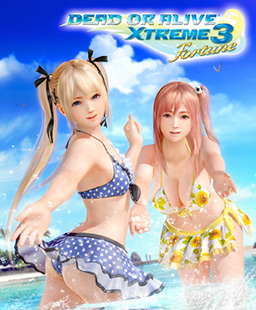
However, that being said, localization can suck sometimes and can be the generator of a lot of controversy. Coincidentally, the most viewed article on this blog happens to be controversy created due to the localization process. You can read the full article right here, but that post was essentially about how the game Dead or Alive Xtreem 3: Beach Vollyball, would not be receiving an English release and localization due to its very sexualized content. In this game’s case, the creators decided not to release it in English speaking areas, although it can be imported to western nations and the game by default does have English subtitles, however what usually happens in situations like this is that the potentially controversial material is changed so that it is less offensive to the culture that it is being introduced to.
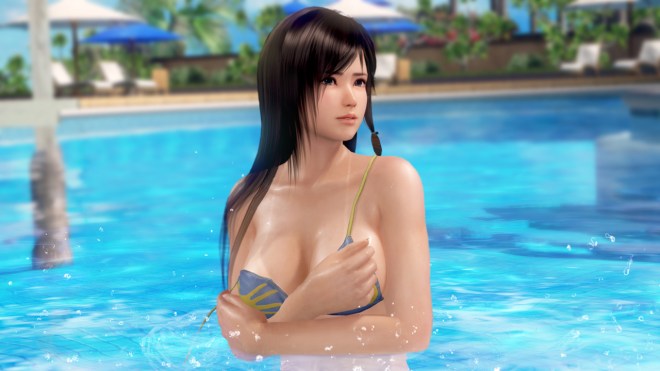
DoAx 2

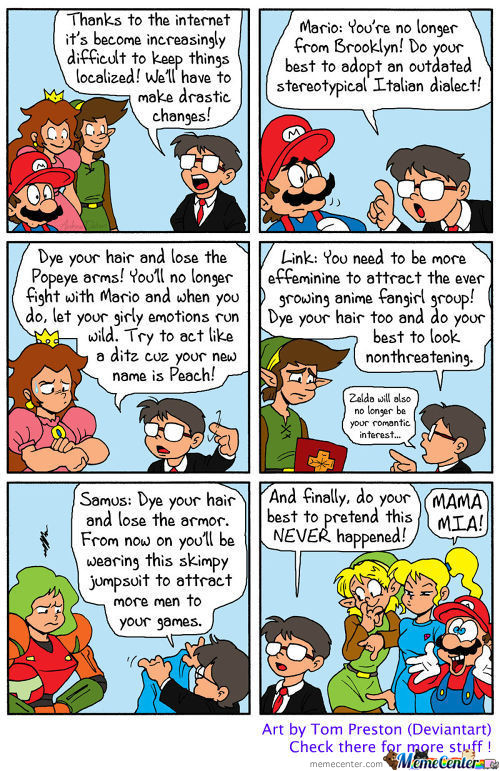
A recent example of this can be found in the upcoming Fire Emblem: Fates games. In these games there exists a character that gets flustered when she is around attractive women. In order to help this character overcome her kind of, sort of gynophobia, the player character puts a magic powder into the woman’s drink without telling her that makes her see men as women and women as men. After other interactions with the female character, the magic powder wears off and the player character and this female character enter into a romantic relationship. Nintendo, the producer of the Fire Emblem games, announced that these scenes would be changed when it came to the west, primary due to fans seeing these interactions as being representative of gay conversion therapy and drugging women. Some people have seen this change as being a positive one that appropriately addressed culturally sensitive issues, while others have responded to this announcement as this game being censored due to the actions of “Social Justice Warriors”.

I am not going to go into too much depth regarding that localization decision, mostly because there is a lot to unpack there and because it merits a whooooooooooooooole other post in and of itself, but I just want to make it clear that changing certain elements of a game is not uncommon in the localization process. In fact, in the previous Fire Emblem game, Fire Emblem Awakening, a character had their personality completely changed between the Japanese version and the English one. In this case, though, I wholeheartedly believe that this change was for the best and that the character was actually improved upon when the game was brought to English speaking countries. I believe this mostly because in the English version they made the character, Henry, punnier.
Localization 2

So that more or less is why localization is controversial; it changes a work of art so that it fits better into the cultural views of the newest group experiencing it. Can localization be considered censorship? I personally think not, but I could definitely see the case that is being made in the contrary. Sure minor character details regarding a game have changed in the process of localization, but I cannot think of one game to be released recently that has had a large part of its story or message changed due to being presented to a new culture. The main issue I have with localization is that it can take so damn long!

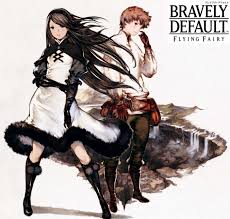
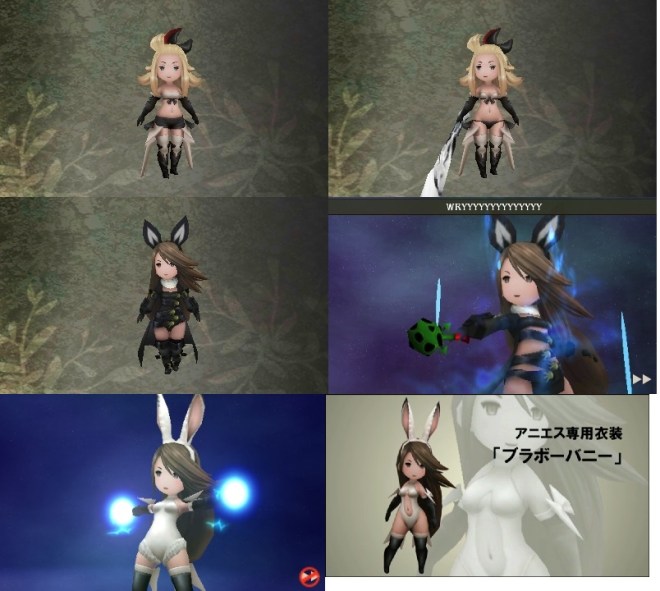
For example, it was recently announced, with much less fanfare than what I believe it merits, that the video game Bravely Second: End Layer would be coming to North America on April 15th. This is nearly a full year after the game was originally released in Japan and two months after it was released in Europe and Australia! It’s no secret that I loved the original game, which coincidentally had it’s own share of peculiar localization changes, and I am severely bummed about having to wait so long to play the sequel.
Localization 3

I know that the localization process can be extremely time consuming, expensive, and nuanced; but I do not care because I desperately need my JRPG fix and because I am extremely eager to see where the story goes from the original’s heartbreaking ending. So there you have it; my personal opinion is that I am far more frustrated with how long a localization process can take sometimes than I am with the process “censoring” (read, sarcastically quote, un-quote) the game. If localization ever does truly and deeply effect a games narrative and it’s messages, I will be the first one to riot; but, until then, I really do not care.

Localization 4

Alrighty, that is more or less all I have to say on this sensitive-ish video game topic. If you liked this post, please leave a like down below and if you have a question or strong opinion about localization, go ahead and leave a comment as well. If you want to stay up to date on the going on’s of this blog, you can subscribe via email in the upper right tab. Alternatively, you can keep up to date by liking the official BaddaBing BaddaBlog Facebook Page or by following me, @LucasDeRuyter on Twitter. I hope you all have a great rest of the weekend and be sure to stop by on Monday for the next installment of Manga (And Also Anime) Monday.

BaddaBing, BaddaBye


Game Grind: Localization, Gamings Eccentric, Hot Mess

Game Grind: Ninten-Do or Ninten-Do Not, There is no Try

Happy Sunday BaddaBing BaddaBlog readers! This is Game Grind, the place on the internet where anything even slightly video game related can be examined, critiqued, and/or praised. I know this segment usually comes out on Saturday, but I was preoccupied with moving back to campus and this article deserves the appropriate amount of time and effort. Today’s post is going to be dedicated to analyzing the recent claims by Nintendo’s new President, Tatsumi Kimishima,in regards to Nintendo’s plans for 2016 and their desire to increase their returns in the next few years. Today I’m going to be looking at the likelihood of Nintendo achieving some of the promises made by it’s president, and how currently existing information compares to and affects the recent press release. Here we go!

nintendo

The first big piece of information presented in this press conference, which can be partially read in it’s translated format over at IGN, is in regards to the upcoming Nintendo NX (tentative title). It was revealed that the NX is going to be focusing on “entirely new [ideas]” and that further details on the NX will arrive later this year. At this point, the public still has a very limited idea of what the NX is and what it will be capable of. Many are speculating that it will be an entirely new console that will replace the lackluster Wii U and that it will bring back cartridge gaming as computer chips are now able to hold more data than Blu-Ray disks. The timing of when this information is released is going to be very interesting, as I suspect that Nintendo would ideally like the NX to be released during the 2016 season. Only time will tell what exactly the NX is going to bring to the gaming industry and if it will be the bounce back Nintendo is desperately looking for.

Another interesting piece of information that was released is that Nintendo is looking to have their world famous characters branch out of video games and into other mediums such as mobile games and TV anime. Nintendo characters in mobile games is not the newest of information, it has been known for some time that Nintendo’s future business plans are going to focus more on the mobile market, but the unavailing of Nintendo characters receiving an anime is entirely new and has some massive implications. Nintendo has not had much to do with either movies or television, with the long running Pokemon anime series being the only notable exception, since 1990 when numerous poorly received television shows and one notorious movie, The Super Mario Bros., ultimately hurt Nintendo’s brand. If these new animated series are created with even a shred of care and hold true to both the game’s and Nintendo’s core values and philosophies, they very easily could be widely successful.

Nintendo anime

The last, and intentionally most interesting, piece of information expressed in the press release is that Nintendo is aiming to raise its profits by about $855 million dollars in the next few years. This would be roughly four times the amount that Nintendo made in its previous business year, which was already impressive as in the years prior to last Nintendo had actually been loosing money. When I first read this goal, I was extremely skeptical. However, as I have been mulling it over in my head for the past day or so, it does seem like Nintendo plans to bring it hard for the foreseeable future. I realize now that the bulk of the games I had written about in my Game Grind: 2016 To Do post were going to be released on Nintendo systems. I have also realized that Nintendo has a lot of big events on it’s horizon.

As this year is Pokemon’s twentieth anniversary, numerous events have been planned for that Nintendo property. The card series is being revamped, old games are being released on new the 3DS system, and a limited edition Pokemon New Nintendo 3Ds is going to be released sometime this year. What is probably going to be the biggest cash cow for Nintendo, however, is the Pokemon GO mobile app, which I woefully forgot to mention on my 2016 to do list (please forgive me, lord Arceus!).This mobile Pokemon game will allow people to catch Pokemon in the real world as they go about their daily lives and has been almost exclusively marketed to people my age rather than children. I can only imagine that the announced Pokemon Super Bowl L (yes, L, not 50) commercial is only going to further promote this mobile game in an attempt to rekindle older individuals love of the series and give Nintendo an opportunity to essentially print money.

Nintendo’s NX will also likely help turn things around for the company. Nintendo has a history of innovative consoles backfiring on them. The better forgotten Virtual Boy being a prime example of this. However, their subsequent console release has always made up for their previous losses. The Nintendo 64 followed the Virtual Boy and sold extremely well in addition to revolutionizing the video game industry with the introduction of analog controls. Nintendo definitely seems to be gearing up for some kind of game changer like that again, and I personally hope that the NX does live up to the speculation and hype surrounding it. Nintendo is arguably responsible for video games growing as they are currently and it would be disheartening to see the company that created generations of gamers fall into obscurity.

That just about wraps up the latest information regarding the House of N. If you enjoyed this post or have any questions regarding it, feel free to leave a like or a comment respectively down below. If you would like to stay up to date with this blog you can do so by subscribing in the upper right tab with your email. Alternatively, you can stay informed by liking the official BaddaBing BaddaBlog Facebook Page or by following me, @LucasDeRuyter, on Twitter. I hope you all have a great Sunday and be sure to stop back here tomorrow for the next installment of Manga (And Also Anime) Monday.

BaddaBing BaddaBye


Game Grind: Ninten-Do or Ninten-Do Not, There is no Try

Game Grind: Homer J….RPG Simpson

Happy Saturday BaddaBing BaddaBlog readers! This is Game Grind the place where we discuss the various elements and aspects of the increasingly diverse video game industry and the culture surrounding it. Today’s topic stems from a comment a friend of mine, let’s call him Drew, made in regards to my last post, Game Grind: 2016 To Do. He said, “Hey MoFo, there are a lot of Japanese games on that list. Why you playin’ all ‘dat shiiiiiiiiiiiiiiiiit? (roughly paraphrased). He only has experience with Western developed video games so I explained to him why I enjoyed some of those foreign titles and suggested he play a few that I think he would enjoy. During that pleasant exchange I realized that it is pretty weird that we refer to Japanese developed role playing games as “JRPGs” and western developed role playing games as “RPGs”. Today’s post is going to be dedicated to explaining what exactly makes a Japanese Role Playing Game a JRPG.

RPG vs. JRPG

Most people believe that the difference between an RPG and a JRPG is that JRPGs are just RPGs made in Japan. If you, understandably, believed that you would be….

Wrong

Games that are considered  JRPGs can be developed anywhere in the world and games that are categorized as RPGs can easily come from Japan. Off the top of my head, some RPGs from Japan include the massively popular Bloodborne and Dark Souls games and an example of a  JRPG created in the West is the renowned Indie game Undertale.  Now that it has been determined that a game’s nation of origin is not a factor in defining either of these genres, the differences between the genres can be examined to uncover what exactly a JRPG is. Here’s what I’ve found in my twenty-ish years with video games.

Undertale Logo

Bloodboren Logo

The primary differences between JRPGs and RPGs are: how they create fulfillment for the player and their narrative focus. In regards to fulfillment, RPGs and JRPGs entertain and entice players in completely different ways. RPGs allow players to take the role of a customized character in a game, usually the hero, and influence and explore the world that they are placed in. Fallout 4 is a perfect example of this. Bethesda’s latest game allows players to create a character modeled after themselves and interact with the world however they feel that they would if they were actually in the game. Alternatively, players can create an entirely unique character and make that character interact with the world however they see fit. RPGs are all about giving a player as much freedom as possible and allowing each player to experience a different story depending on their actions.

fallout 4

JRPGs, on the other hand, do not allow players to insert themselves into a game. Sure JRPGs have, historically, allowed players to name the characters; like in naming the player character in the Pokémon games after yourself (and the rival character “AssHat”), but a JRPGs story largely unfolds regardless of player input and the gameplay largely revolves around getting from one plot point to another. Final Fantasy IV is a solid example of this. In that game you’re a guy doing a thing with a pretty tragic backstory. Once you do that thing you learn a little bit more about the world your in, learn a bit more about the other characters, and then have to go do another thing. This continues and along the way the player gets some literary devices, feel some feelings, decides which players they like and dislike, and maybe tears up a little, until it calumniates in an epic battle against a monster that is trying to take over the planet. The fun people have in playing a JRPG does not stem from the amount of freedom and choice they are given, but rather from experiencing a, hopefully, rich and complex narrative.

Final Fantasy 4

Both genres also put very different amounts of importance and focus into a game’s narrative. RPGs, due to their inherent focus on freedom and world building, typically have less developed stories that instead serve mostly to expand the game’s world. Last generation’s, arguably best, RPG Skyrim is a perfect example of this. Nobody played that game because of the main story and it was in no way designed to be played solely for its central narrative. In Skyrim you play as a warrior who is destined to kill a tyrannical dragon god spoken of in ancient lore who is trying to enslave all of humanity. That sounds pretty epic, right!? Well it is, but, if you play Skyrim and focus only on the main quests, you can beat the main story in as little as three to four hours. Skyrim is typical of RPGs in that it has a very short and direct main story, but it places the player in a massive world and frequently presents them with opportunities to explore it and experience different storylines.

Skyrim

JRPGs, on the other hand, have players experience a singular narrative that can last more than forty hours. While JRPGs also have players exploring an expansive and interesting world, all of the games locations are usually explored as the player works their way through the game’s plot.  While there are usually side quests in JRPGs that take players to new areas and experiences, they usually do not contribute extensively to the overall experience of the game. I’m going to use 2014’s incredible JRPG Bravely Default s an example for this one. This game follows an almost linier story, for the most part, with the inclusion of a collection of optional bosses that, upon defeat, reward the player with additional character classes. During the game’s second half, these bosses can be fought again in different combinations and circumstances.
While the player does not earn anything besides experience and money for doing this, each of these side quests adds a new depth to each of the enemy characters and expands their character. If a player were to skip these optional fights, they would miss out on some of the game’s charm, but it would not be as much of a detriment to their experience as skipping all side quests in Skyrim would be.

Bravely default

In short, JRPGs focus on story while RPGs focus on emersion. JRPGs allow a player to experience a narrative in the unique and intimate way that only video games are capable of. RPGs attempt to enthrall a player by providing them with a vast world to explore and uniquely interact with. While today both of these genres borrow from each other in numerous regards, it is impossible for these two fundamentally different genre’s to be wholly combined. It is strange, now that I think about it, that so many genres of video games are named after arbitrary details like where they are made or what kind of camera angle they use. I think renaming video game genres so they better reflect the games that comprise them could be an upcoming 4B post. Anyway, there you have it, the distinction between the poorly named genres of role playing games and Japanese role playing games.

That may have gone on a bit longer than I intended, but I think I proved my point fairly well. If you enjoyed this post please give it a like and leave a comment down below. If you would like to stay up to date with 4B, you can do so in the upper right tab via your email. Alternately you can stay informed by following the official BaddaBing BaddaBlog Facebook Page or you can follow me, @LucasDeRuyter, on Twitter. I really do hope you have a great weekend and be sure to come back here on Monday for the next installment of Manga (And Also Anime) Monday.

BaddaBing, BaddaBye


Game Grind: Homer J….RPG Simpson

Game Grind: Wet, Hot, American Controversy

Happy Saturday BaddaBing BaddaBlog readers! This is Game Grind, the place where anything regarding video games, video game culture, or the video game industry is covered…or uncovered. (I promise that that joke will make sense in a minute.) Today’s topic is something that has become a bit of a controversy this past week. This event has aroused many opinions from gamers and has caused hard lines to be drawn between groups with differing views. I’m referring to the news that the game Dead or Alive Xtreme 3 will not be seeing a western release; allegedly due to censorship issues.

Dead or Alive Extreem 3

(Sorry, I couldn’t resist making those lame jokes. Apparently I’m twelve 😛 )

The Dead or Alive games are Japanese combo based fighting games that, while not exactly at the forefront of the fighting game genre, have been received well by fans and critics with the highest rated game in the series, Dead or Alive 2, having received a 9/10 from GameInformer and a 9.4/10 from IGN. Dead or Alive is most famous (or infamous depending on your viewpoint) for having highly sexualized characters in revealing attire. The Dead or Alive Xtreme series, is a spin-off series that drops the fighting aspect of the game and instead is a collection of mini-games featuring the female characters from the main series of games on a tropical island. In the DoAX (the shorthand for Dead or Alive Xtreme) series the women look like and are dressed like this:

doax

And this:

DoAx 2

And this:

doAx 3

And also this:

DoAx 4

So yeah, it’s that kind of game and the creators of DoAX wear that on their sleeves (I don’t think any of the characters have sleeves, though). This side series has generally received average to good reviews, with the first game being considered the better of the two released so far. A problem for the side series, though, is that the games have never sold particularly well.  The second game DoAX game was an Xbox 360 exclusive, which extremely limited the number of copies sold in Asia, and the lackluster quality and Mature rating also limited sales in the West.

With this in mind, it is unsurprising that it was announced that DoAX3 would not be receiving a Western release. It is not uncommon for Japanese games not forego the localization process if it is believed that they will not sell well enough in Western markets for the time and effort put into the process to be worth it. However, I would not be writing this article if the publishers of the game had said, “We won’t be releasing this game in the US because our studies estimate that our game won’t sell particularly well in those markets”. Instead the creators of Dead or Alive Xtreme 3, Koei Tecmo, claimed that the newest game will not be released in English, due to, “many issues happening in video game industry with regard to how to treat female in video game industry”.

I should make it clear that the previous quote is accurate, but the conversation it comes from is a poorly translated Facebook Q and A session.

doax 5

This statement, which is clearly difficult to discern any accurate meaning or intention from, has caused many individuals to feel that the game will not be coming to the West due to the changing climate regarding the appropriate way to depict women in video games. These individuals, many of whom have ties to the ongoing Gamer Gate controversy (that is a WHOLE ‘nother blog post in itself), are claiming that “Social Justice Warriors” have caused this game to be “censored” and are upset about this because it violates their views of what ethics in video games and video game journalism should be. (That topic is actually a series of blog posts in itself.) That’s more or less where the situation stands currently and it is more than likely that this incident will continue to be used in arguments relating to the video game industry for years to come.

My view on this subject is fairly simple, a lot of people are getting played. Koei Tecmo and it’s international distributor, Play Asia, are intentionally trying to create controversy around DoAX3 so that more people hear about it and more people buy it. This technique is not new in the business world and it certainly not new in the video game world. Using controversy to sell games has been around since home video game consoles first became a thing. You could even argue that this sales strategy is what actually allowed games, such as the Grand Theft Auto series, to become as popular as what they are today. There’s a reason that Play Asia tweeted out that a version of DoAX3 with English subtitles will be available for English speakers to import, most likely for an additional cost, shortly after it was announced that DoAX3 would not be localized. The more this controversy grows, the more money the creators of the game are going to make. Whether or not that is ethical, I do not know. However, I do know that I wish I didn’t have to listen to a ridiculous number of people angrily fussing about this corporately designed, non-issue of a “controversy” on the internet.

That wraps up this latest installment of Game Grind. If you enjoyed it please leave a comment down below and (or leave a like if the thumbnail on the Facebook page brought you here), if you have an opinion you wish to express on this matter, please leave a comment as well. As always, you can stay up to date with BaddaBing BaddaBlog by subscribing in the upper right tab via email. Alternatively, you can stay caught up by liking the official BaddaBing BaddaBlog FaceBook Page or by following me, @LucasDeRuyter, on Twitter. I hope everyone has a great Thanksgiving weekend and that you come back here on Monday for the latest installment of Manga (And Also Anime) Monday.

BaddaBing, BaddaBye
Game Grind: Wet, Hot, American Controversy